![]() |
![]() |
![]() |
![]() |
![]() |
![]() |
The idea of breeding Morgans with sport as a focus, started many years ago with Jack. Originally, he spent time visiting many farms across the country including Funquest, Greentree, Teton, Mortana, Rogue Hill Morgans and others looking for a stallion prospect to promote in dressage. As fate would have it, he never did buy a stallion—but he did acquire a wife (Nadette) who was just as enthusiastic about horses as he was. Ironically, the first horse we bought together was a gelding, which somewhat delayed us getting into the horse breeding business. It has been said that horse breeding is part art and part science (and also a lot of luck). The luck part we can’t do much about, but both of us enjoy spending time gathering information from research that focuses on the conformation of sound and successful sporthorses, as well as visiting with breeders having similar interests. Our program blends the traditional Brunk, Old Government, and Working Western lines—all bloodlines that have consistently produced exceptional Morgan athletes. The stallions we choose are individuals who have excelled in one or more sport disciplines including dressage, reining, eventing and combined driving; or are exceptional individuals from bloodlines that have consistently produced quality Morgan sporthorses. This information, combined with our own observations over the years has helped shape the criteria we look for in the horses we produce and the stallions and mares we use.
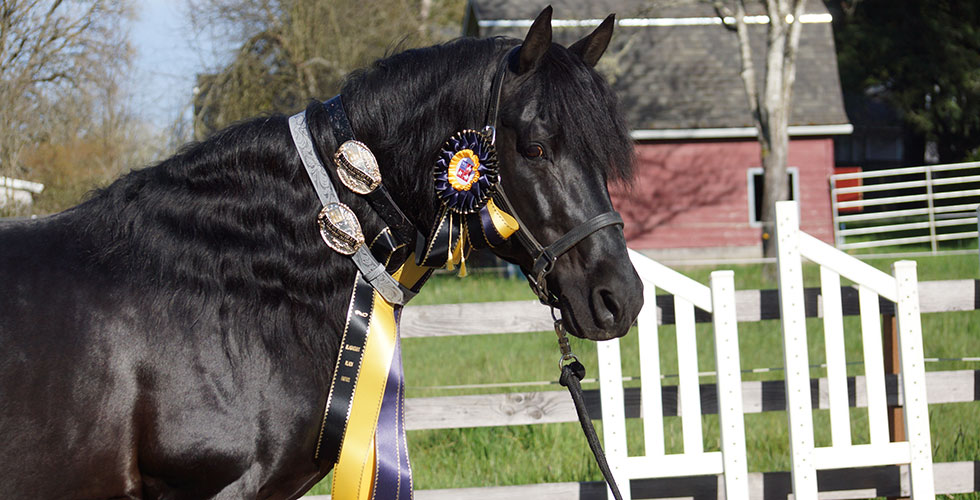
• Morgans that are true to the traditional breed type in substance, style and quality. • Three correct and expressive gaits, with particular emphasis on the quality of the canter and walk. The walk should be ground-covering with a good overstep, and the canter should have loft and expression.
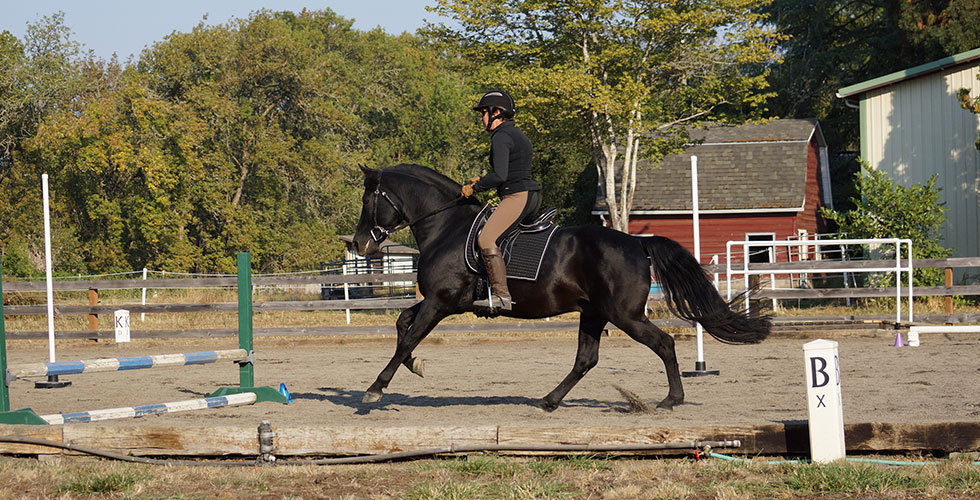
• A catty horse that knows where its feet are all the time, including when they are asked to do spins, lateral work and changes of lead. • Confident horses that enjoy the mental challenges of training and want to come back for more. We value stallions that have been successfully campaigned as we feel it tells us something about their physical abilities, disposition and work ethic. Our broodmares are trained and held to the same standards as our performance stock for the same reasons. Even more importantly, as a family operation, it is important that our horses are safe to handle and be around for people of all ages and levels of experience.
A breeding farm is an expression of the values and lifestyles of the owners—what is important to them in regards to the type of horses they breed, the pride they take caring for and raising their horses, how their values are reflected in the care of the land, and how this is all integrated into their family and home. Our farm is no exception. The landscapes you see at the bottom of the pages on in this website are pictures take from our own front yard and pastures. It is our hope that you will enjoy your “virtual visit” to our home and with our horses through this website and will come again! |


Gladheart Farm is a small, family program located in the Soap Creek Valley about 7 miles north of Corvallis, Oregon. Our goal is to produce Morgans having classic type plus the athleticism and trainability to shine in sport disciplines.
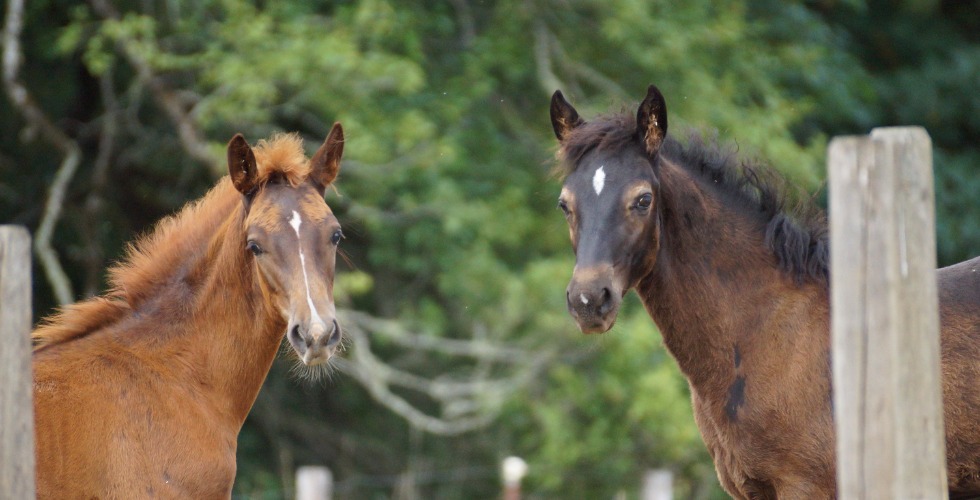
However, soon after moving to our current property, we purchased our foundation broodmare from Jean Sauer (Rogue Hill Morgans)–Rogue’s Midnight Melody (Flight Commander X Rogue’s Theme Song). A year or so later came our first foal with our farm prefix, Gladheart Linhawk. Although on a small scale, Gladheart Farm and Morgan Horses had begun.
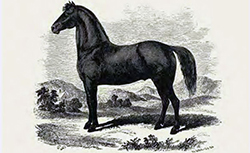
Although it is important to us to produce a Morgan that is true to traditional breed-type, it is also very important to produce a horse that is an athletic, using animal. The original Justin Morgan was sought after and admired for both these traits—as an attractive, correct individual that could do just about any task asked of him, and do it well. With these standards in mind, we place importance on several traits. We value…
• Soft, flexible backs that allow the horse to curl their loins and bring their hindquarters underneath them. We also look for a strong loin coupling (the “transmission” of a horse) which is important in transferring power from the hindquarters forward. The result is a horse that raises the root of its neck and rounds its back and moves forward with impulsion from one gait to another instead of raising its head and hollowing its back and leaving its “hocks out behind”.
Last, but certainly not least, the most important criteria is that our horses must be fun! Not only fun to ride, but fun to watch and live with on a day-to-day basis. We enjoy our horses, and enjoy sharing the fun we have with them with friends and visitors whenever we can.